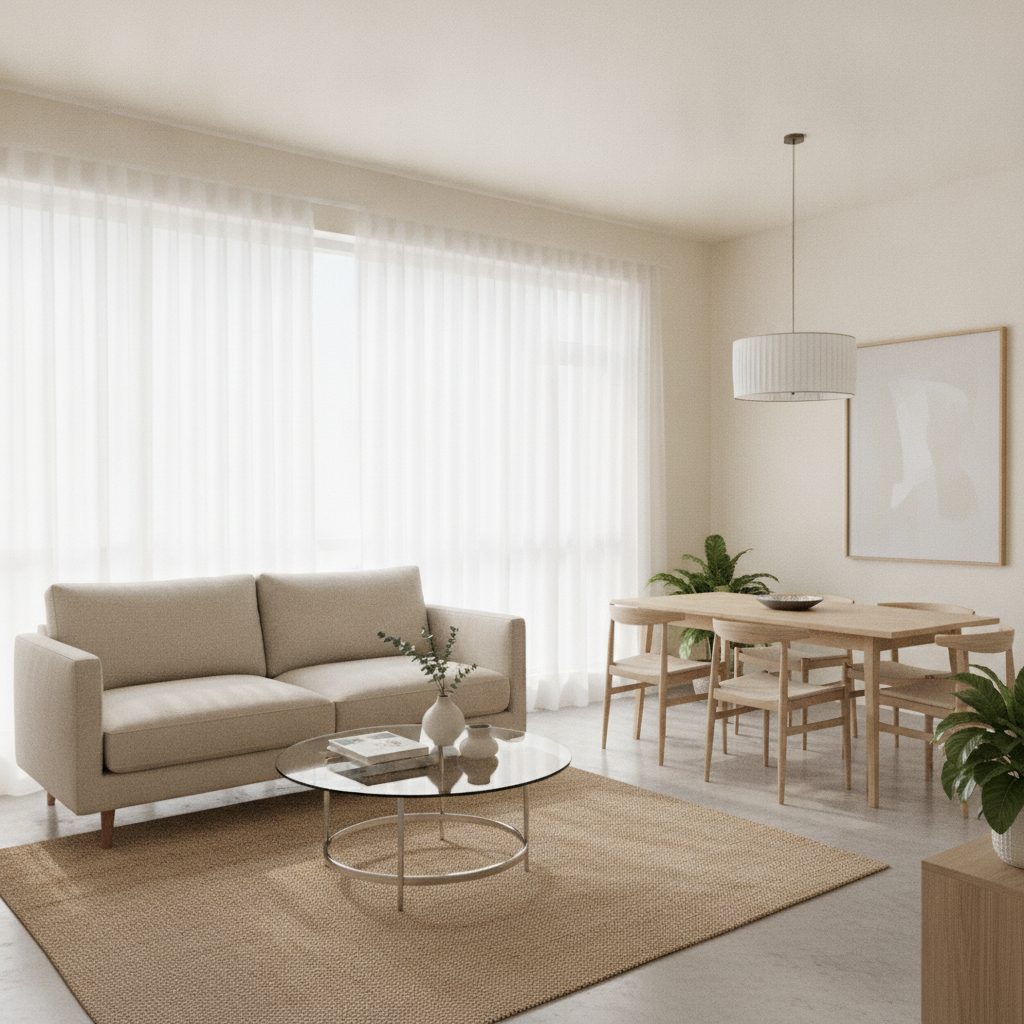
When we first bought our fixer-upper, the word I'd use to describe the layout was 'choppy.' Each room felt like a little box, completely cut off from the next. I knew I couldn't knock down walls, but I was determined to make our home feel more connected and spacious. It took some trial and error, but I discovered that creating a sense of 'flow' has less to do with square footage and more to do with a few smart, simple tricks. It's about guiding the eye, unifying spaces, and letting the light in. I'm so excited to walk you through the very same ideas that transformed our small rooms from cramped to connected. These are things anyone can do, whether you own or rent, and I promise they make all the difference in how you live in and love your home.
1. The Monochromatic Bridge
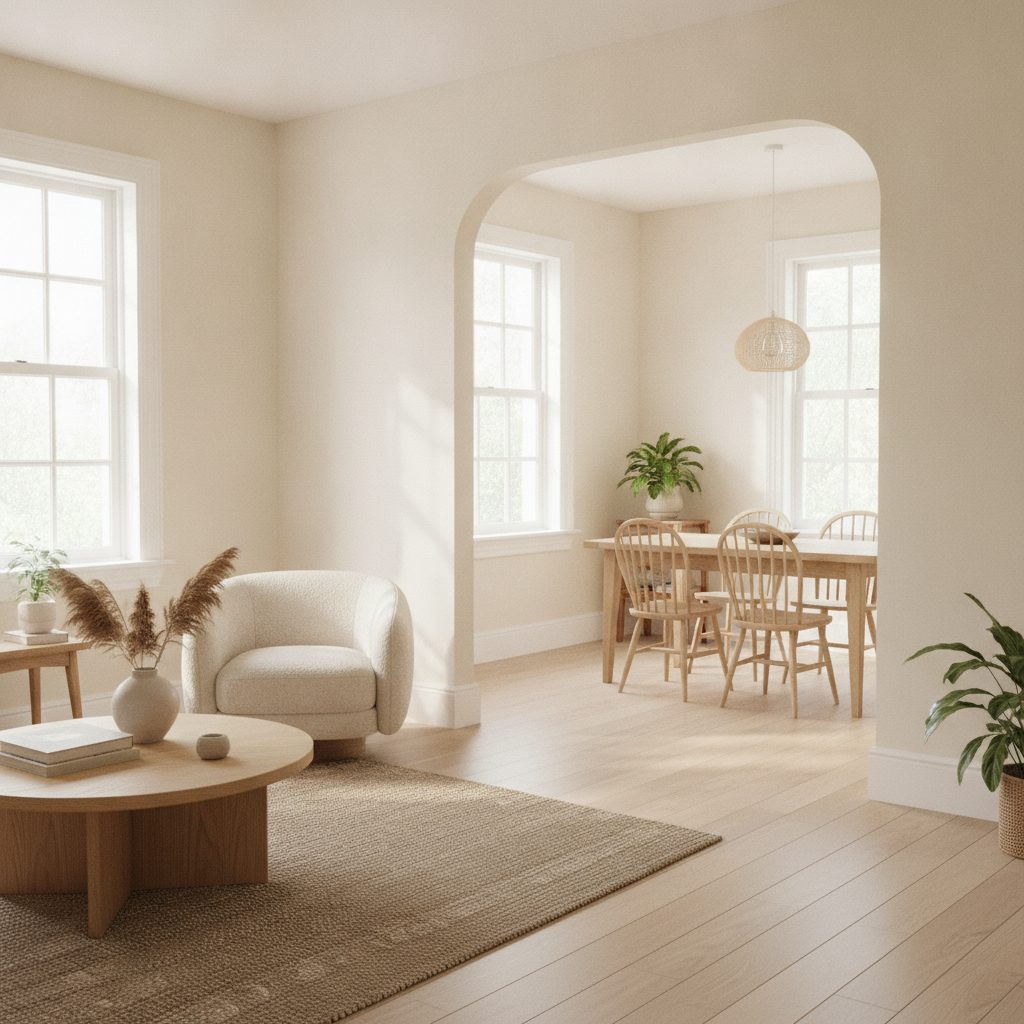
Unify adjacent small rooms by painting them in the same color family. Choose a soft, light-reflecting shade like a warm off-white or a pale greige and use it on the walls in both spaces to erase the visual boundaries. Then, layer in textures like a cream-colored boucle armchair and a linen sofa to add depth without introducing jarring new colors. For a renter-friendly version, use large-scale art with a similar color palette in each room to create that cohesive link.
2. Leggy Furniture and Clear Views
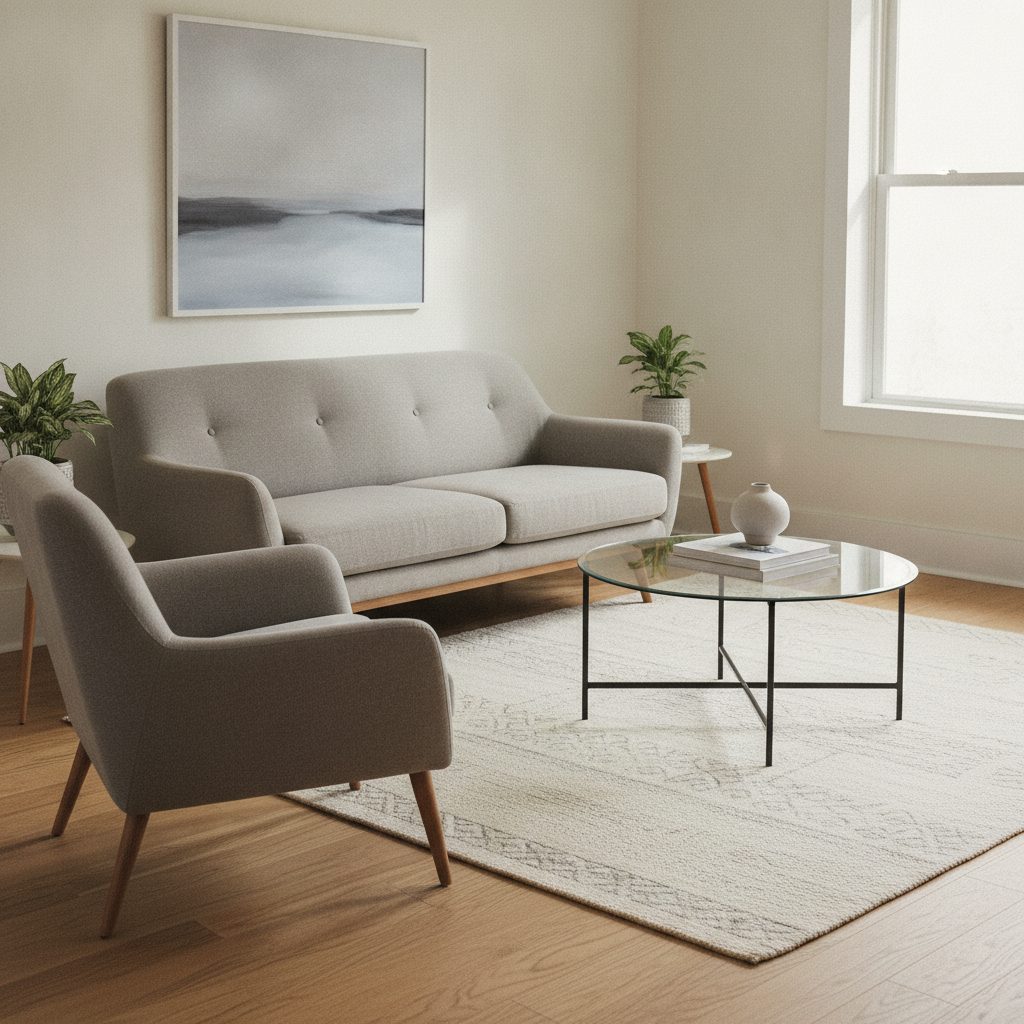
Choose furniture that creates a sense of airiness by allowing you to see the floor underneath. Opt for a sofa and armchairs on tapered wooden legs, and consider a coffee table with a slim metal frame or even one made of clear acrylic. By keeping furniture profiles low and lifting them off the ground, you create uninterrupted sightlines that make the entire space feel more expansive and open.
3. Strategic Mirrors and Layered Light
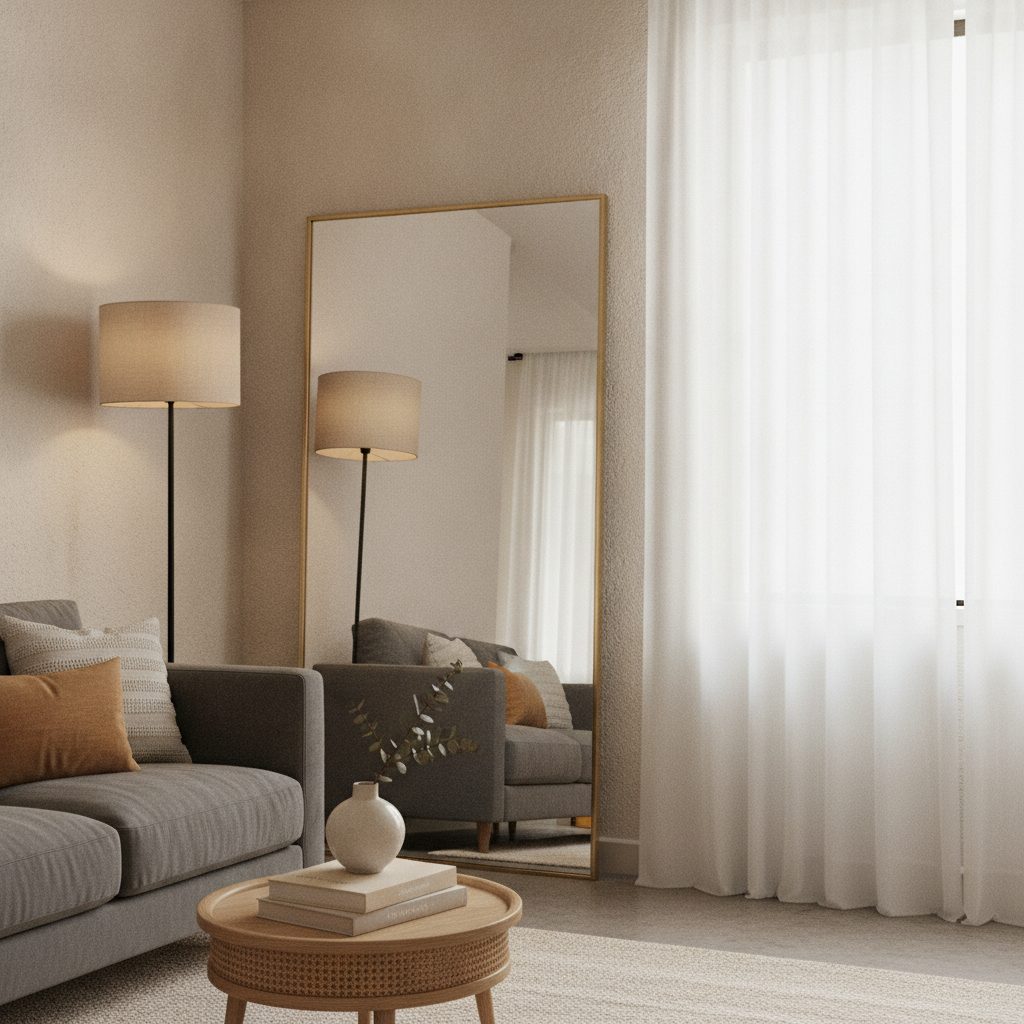
Amplify your natural light and create an illusion of depth with a large, simply-framed mirror. Place it on a wall opposite your main window to bounce light around the room, instantly making it feel brighter and bigger. Then, layer your lighting with a warm-toned floor lamp in a dim corner and a small ceramic table lamp on a side table to ensure the entire space feels welcoming and evenly lit, day or night.
4. The Unifying Rug Path
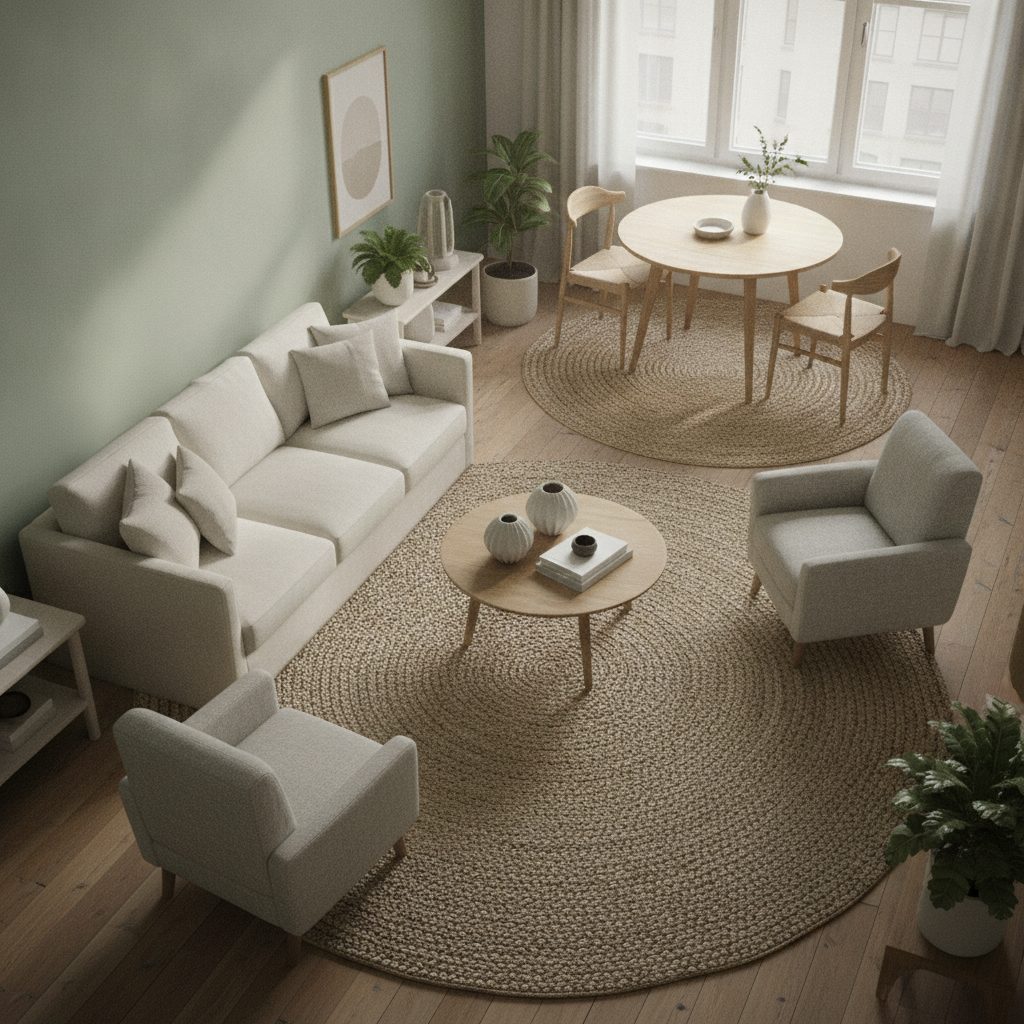
Use area rugs to define zones without building walls. In an open-concept small space, like a living and dining area, use two separate rugs that share a similar color palette or pattern style. Placing a jute rug in the living area and a smaller, matching jute runner in the adjacent hallway connects the two zones visually, creating a cohesive flow that guides you through the space.
5. Draw the Eye Upward
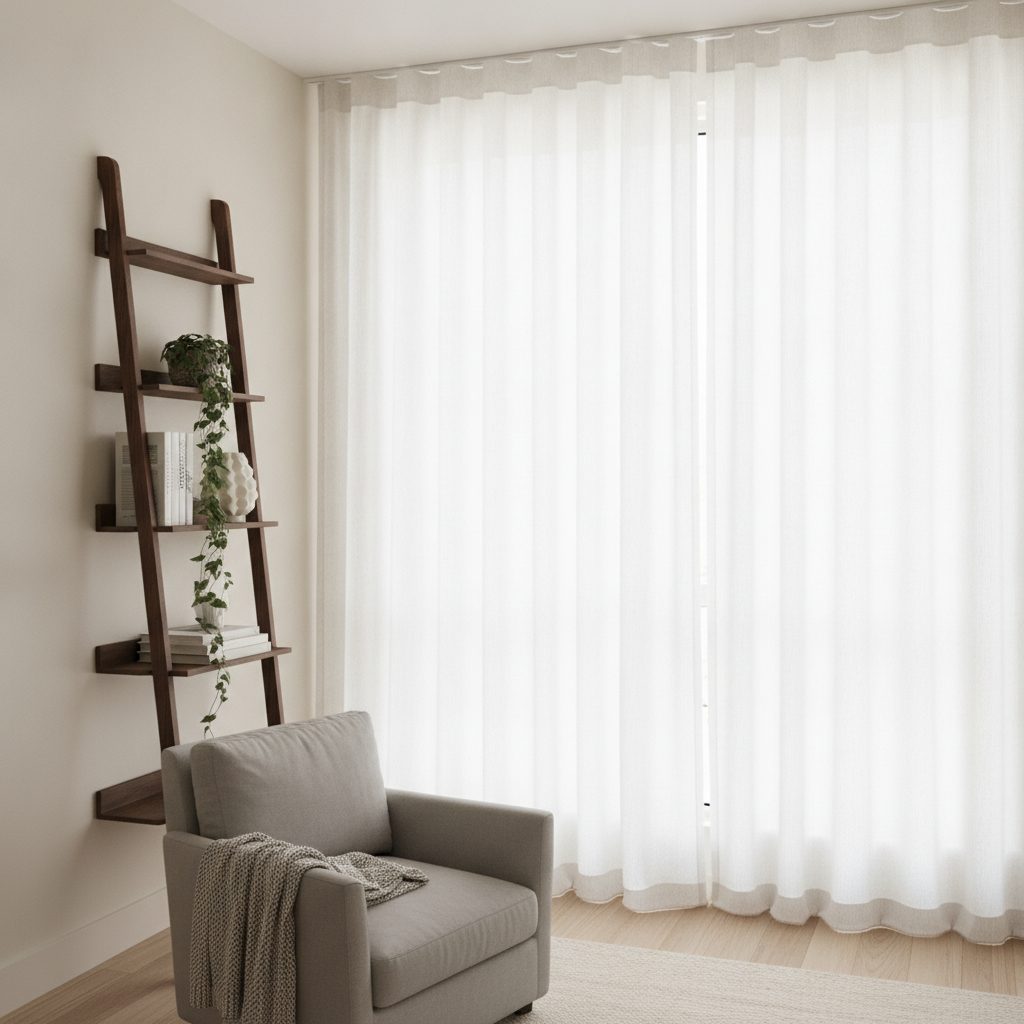
Create a sense of height and openness by emphasizing vertical space. Hang your curtain rods as close to the ceiling as possible—at least 6 inches above the window frame—and extend them wider than the window, so the panels frame it without blocking light. Complement this with a tall, narrow bookshelf or a single piece of vertical wall art to encourage the eye to travel upward, making the ceiling feel higher and the room larger.
Final Thoughts
Creating a home that feels open and connected is all about making thoughtful choices that work together. It’s not about having the biggest space, but about using color, light, and the right pieces to create a feeling of ease and welcome. I hope these ideas help you see the potential in your own small rooms and empower you to create a home you truly love spending time in. Start with one idea and see what a difference it can make!
FAQ
Can I still use dark colors to create flow?
Absolutely! The key is consistency. If you love a moody charcoal or a deep navy, try using it in adjacent rooms and on the trim. This technique, called color drenching, can actually blur the edges of a room and create a cozy, connected feeling that is very sophisticated.
What's the biggest mistake to avoid when trying to create flow?
I think the most common mistake is using lots of small, disconnected pieces of furniture and decor. One larger, well-placed mirror is better than many small ones. A single cohesive color palette is better than multiple competing ones. Being intentional and thinking 'unified' over 'cluttered' is the best rule of thumb.
How can I apply these tips in a studio apartment?
These ideas are perfect for studios! Use rugs to clearly define your 'living' and 'sleeping' zones. A single, light wall color throughout will make the entire space feel like one large room. And furniture with legs is a must—seeing the floor underneath your bed, sofa, and tables will make a huge impact on how spacious it feels.