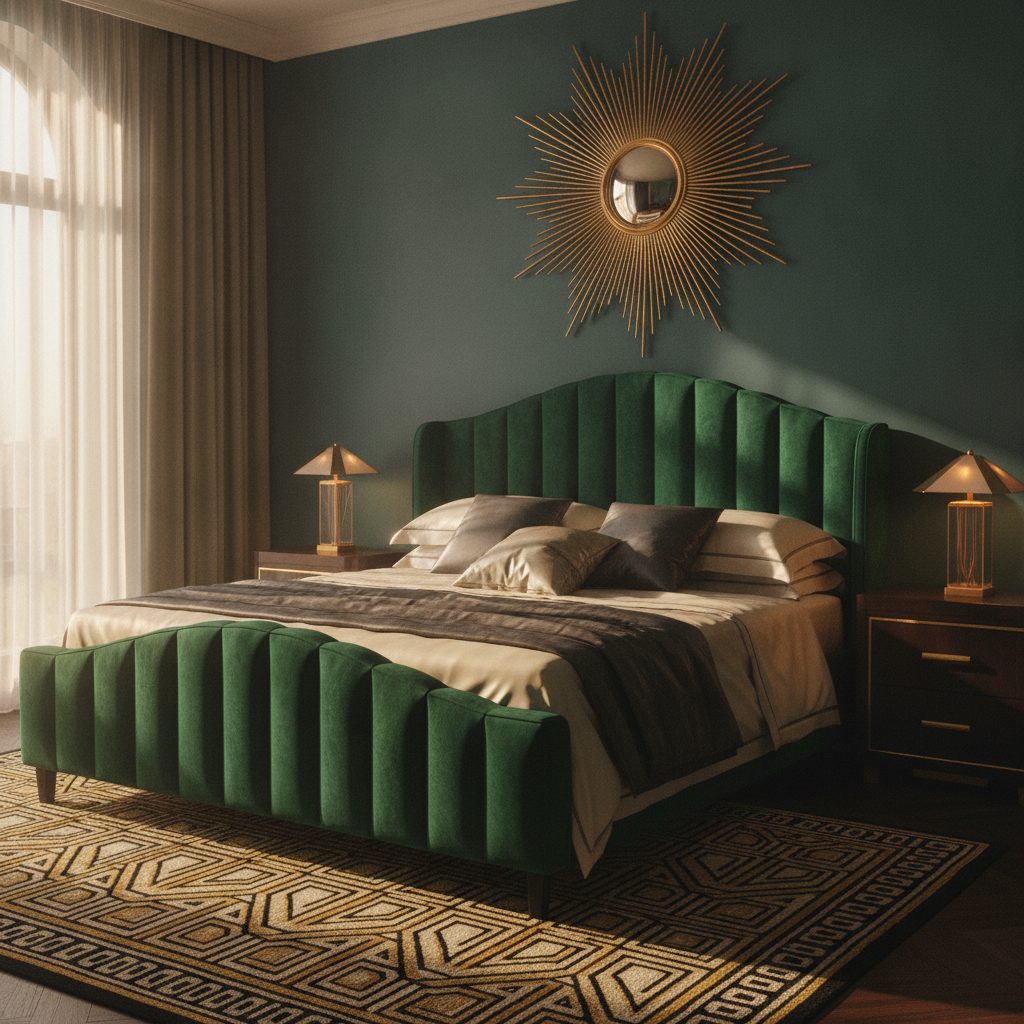
I have to admit, there's a part of me that has always been drawn to the glamour of the past. When I see old black-and-white films from the 1920s and 30s, I’m not just watching the story; I’m swooning over the sets. The sharp lines, the shimmering metallics, the sense of opulence and optimism—it’s just magical. That, my friends, is the allure of Art Deco. And lately, I’ve seen this style making a huge comeback, not in a stuffy, museum-like way, but in a fresh, modern, and incredibly inviting form.
Why now? I think after years of minimalist, Scandinavian-inspired design (which I also love, don't get me wrong!), we're craving a little more personality, a bit more drama, and a touch of luxury in our personal spaces. We want our homes to feel like a special escape, and no room is more deserving of that feeling than the bedroom. It’s our sanctuary, the place we begin and end each day. Infusing it with the elegance and comfort of Art Deco design feels like the ultimate act of self-care.
But I know what you might be thinking. “Art Deco? Isn’t that complicated and expensive?” It can seem intimidating, with its reputation for high-end materials and bespoke furniture. But I’m here to walk you through it, friend to friend. We’re going to break down the core elements of this gorgeous style and find ways to bring it into your own bedroom that are totally doable, budget-friendly, and even renter-friendly. Let’s create a glamorous retreat that feels both timeless and perfectly you.
Start with a Rich, Moody Color Palette
One of the most impactful ways to set an Art Deco mood is through color. This is not the time for pale, airy neutrals. Art Deco design embraces depth, drama, and saturation. Think of a jewelry box filled with precious gems—that’s your inspiration.
The Colors to Choose:
- Jewel Tones: Deep emerald green, sapphire or navy blue, ruby red, and amethyst purple are the stars of the show. These colors create a cozy, cocooning effect that’s perfect for a bedroom.
- Dramatic Darks: Don’t be afraid of black! A black accent wall, or even black trim, can provide a stunning, graphic contrast that makes other colors and metallics pop.
- Warm Neutrals: To balance the intensity, layer in creamy whites, soft grays, and even dusty blush or soft taupe. These act as a sophisticated backdrop.
How to Use Them: My favorite application is creating an accent wall behind the bed. It instantly establishes a focal point and adds incredible depth. I used a shade very similar to Benjamin Moore's 'Hunter Green' in a guest room refresh, and the effect was breathtaking. It made the simple brass bed frame look like a million bucks. For the truly bold, painting the entire room—including the ceiling—in a deep navy or charcoal can be an incredibly glamorous move. It blurs the lines of the room and creates an intimate, enveloping atmosphere.
When you’re painting, consider the finish. A matte or eggshell finish on the walls provides a velvety, non-reflective surface that allows your metallic and glossy accessories to truly shine. It feels so much more luxurious than a standard satin finish.
Budget & Renter-Friendly Tips: If painting is off the table, you have amazing options! High-quality, peel-and-stick wallpaper has become a game-changer. Look for designs with classic Art Deco motifs like geometric fans, chevrons, or stepped patterns in a deep jewel tone. It’s a fantastic way to create a feature wall with zero long-term commitment. Another idea I love is to get large, inexpensive canvases from a craft store and paint them a solid, deep color. Group two or three behind the bed for a dramatic, color-blocked headboard effect.
Select Furniture with Strong Lines and Graceful Curves
Art Deco furniture is all about shape and silhouette. It balances strong, symmetrical, and often masculine lines with soft, feminine curves. This interplay is what gives the style its timeless appeal. Look for pieces that make a statement without being overly ornate.
Key Shapes & Materials:
- Symmetry: This is the golden rule. Whatever you do on one side of the bed, mirror it on the other. Think matching nightstands, matching lamps.
- Streamlined Forms: Look for furniture that feels sleek and aerodynamic. Avoid anything too rustic or chunky.
- Curved Edges: Waterfall dressers, curved headboards, and rounded armchairs soften the geometry.
- Stepped Details: The iconic “ziggurat” or stepped pyramid shape can be found in mirror frames, table legs, and headboard designs.
- Materials: Dark, rich woods like walnut and ebony, often with a high-gloss or lacquered finish, are classic. You’ll also see mirrored surfaces and pieces inlaid with brass or chrome.
The Key Pieces:
- The Bed: This is your centerpiece. A channel-tufted velvet headboard is quintessentially Deco. The vertical lines add height and texture, and the velvet feels incredibly luxe. Look for one in a jewel tone like emerald, navy, or even a deep mustard yellow. If velvet isn't your thing, a wooden frame with inlaid brass lines or a classic fan-shaped silhouette is just as stunning.
- Nightstands: Flank the bed with a pair of matching nightstands. This is non-negotiable for achieving that symmetrical Deco look. Mirrored nightstands are a classic choice, as they bounce light around and add a touch of sparkle. Alternatively, look for lacquered wood pieces with elegant brass or chrome hardware.
- Dresser & Seating: A long, low-slung dresser in a dark wood will ground the space. If you have room, a small velvet armchair or a channel-tufted bench at the foot of the bed adds another layer of comfort and style.
Budget & Renter-Friendly Tips: This is where thrifting and DIY come in! I constantly scan Facebook Marketplace and local secondhand shops for pieces with “good bones.” Look for dressers or nightstands from the 70s or 80s—many of them have Deco-inspired shapes. A coat of high-gloss black or navy paint and some new, geometric brass hardware can completely transform a dated piece. For a headboard, you can create a DIY channel-tufted version using plywood, foam, velvet fabric, and a staple gun. There are tons of tutorials online, and it’s a weekend project that delivers huge impact for a tiny price.
Layer Luxurious and Contrasting Textures
To keep an Art Deco bedroom from feeling like a cold, hard museum exhibit, you absolutely must layer in soft, luxurious textures. This style is as much about how a room feels as how it looks. The goal is to create a rich sensory experience through contrast.
The Textures to Mix:
- Velvet: This is the hero fabric of Art Deco. Use it on your headboard, curtains, throw pillows, or an occasional chair. It catches the light beautifully and feels incredibly soft to the touch.
- Silk & Sateen: For bedding, nothing feels more glamorous than silk or high-quality sateen sheets. They have a subtle sheen that complements the metallic elements in the room.
- Faux Fur: A faux fur throw blanket draped over the bed or a small faux sheepskin rug next to it adds a dose of cozy, touchable softness. It’s that perfect contrast to the sleek, hard surfaces of lacquered furniture.
- High-Pile Wool: Underfoot, a rug with a geometric pattern in a plush wool adds warmth, sound absorption, and another layer of pattern. Look for designs with strong lines, arcs, or chevrons.
- Marble & Stone: A small marble tray on a nightstand or a lamp with a marble base introduces a natural, cool, and heavy element to balance all the softness.
How to Layer Them: Start with the largest pieces first. Lay down your geometric wool rug. Then, make the bed: smooth sateen sheets, a velvet quilt or duvet cover, and then pile on the pillows. This is where you can have fun! I like to mix a couple of large velvet Euro shams with standard silk pillowcases and finish with a single, interesting accent pillow—maybe one with metallic embroidery or a bold fan pattern. Finally, drape heavy velvet curtains. Letting them “puddle” just a tiny bit on the floor adds a sense of drama and opulence.
Practical Notes: Don’t worry about everything being super expensive. There are amazing velvet-look curtains and duvet covers made from durable, washable materials. For rugs, a synthetic material with a similar plush feel can be a great budget-friendly alternative to wool. The key is the visual and tactile contrast, not the price tag.
Illuminate with Dramatic Statement Lighting
Lighting in an Art Deco room isn’t just functional; it’s the jewelry. It’s one of the easiest ways to inject the style into your space and create that signature glamorous ambiance. Think sculptural, geometric, and metallic.
The Fixtures to Look For:
- The Main Fixture: If you can only change one thing, make it the overhead light. Swap out that boring flush-mount for a tiered chandelier, a sputnik-style fixture with brass arms and globe bulbs, or a large drum pendant with a metallic interior. This will instantly elevate the entire room.
- Bedside Lighting: For that crucial symmetry, use matching lamps on your nightstands or install sconces on the wall. Wall sconces are fantastic because they free up space on your nightstand. Look for designs featuring frosted or ribbed glass, fan shapes, or simple globe forms with brass or chrome details.
- Task Lighting: If you have a reading nook or a vanity area, add a stylish floor lamp with an arched arm or a small, sculptural table lamp.
The Golden Rule of Ambiance: Put everything on a dimmer switch! I cannot stress this enough. Art Deco is all about mood, and being able to control the intensity of your light is essential. Bright light is great for cleaning or finding a lost earring, but in the evening, you want to be able to dim everything down to a soft, warm glow. It makes the room feel instantly more relaxing and romantic.
Budget & Renter-Friendly Tips: Lighting can feel like a big investment, but it doesn't have to be. For renters, plug-in wall sconces are a brilliant invention. They give you the look of custom lighting with no wiring required. You can find beautiful, affordable options online. If you own your home but are on a budget, changing a ceiling fixture is a relatively simple DIY project that can be done in an afternoon. Just make sure to turn off the power at the breaker first! You can also find great-looking Art Deco-inspired lamps at places like Target, HomeGoods, or even by scouring thrift stores for unique bases that you can pair with a new shade.
Accessorize with Metallics, Mirrors, and Geometry
Now for the fun part—the finishing touches! Accessories are where you can really lean into the Deco theme and add personality. This is where you bring in the sparkle, the patterns, and the glamour that tie the whole room together.
Essential Accents:
- Mirrors: A statement mirror is a must-have. A classic sunburst or starburst mirror above the bed or dresser is an iconic Art Deco choice. It acts as a piece of art and bounces light beautifully. Another option I love is a large, floor-length mirror with a simple arched top and a thin brass frame. It adds elegance and makes the room feel so much larger.
- Metallics: Choose a primary metal—usually brass or gold for a warmer feel, or chrome/silver for a cooler, more machine-age look—and repeat it throughout the space. Use it in your lighting, hardware, mirror frames, and small decorative objects. This consistency is what makes the design feel intentional and cohesive.
- Hardware: This is one of my favorite budget-friendly upgrades. Swap the boring knobs on your dresser and closet doors for new ones. Look for geometric shapes—hexagons, half-moons, long T-bars—in your chosen metal. It’s a tiny change that makes furniture look so much more expensive.
- Art & Decor: Look for art prints with stylized figures, architectural drawings of Deco buildings (like the Chrysler Building!), or bold geometric patterns. Frame them in simple black or metallic frames. On your dresser or nightstands, create a small vignette. A brass tray is perfect for corralling items like a beautiful perfume bottle, a small jewelry box with shell inlay, and a vase with a single, dramatic flower or feather.
Placement is Everything: When styling surfaces, think in odd numbers. A group of three objects—say, a lamp, a small stack of books, and a vase—looks more dynamic and interesting than a group of two or four. Vary the height of the objects to create visual interest. And remember, less can be more. You want the room to feel curated, not cluttered.
Common Art Deco Mistakes to Avoid
As with any distinct style, it’s easy to go a little overboard. Here are a few common pitfalls I see and how to sidestep them to create a room that’s chic, not kitschy.
-
Going Full Theme Park: The goal is an Art Deco-inspired bedroom, not a 1920s movie set. Avoid buying everything from one collection or making every single item in the room adhere to the style. The most beautiful spaces feel collected over time. Mix in a few modern elements—a simple, contemporary piece of art, a plain linen pillow—to keep the room feeling fresh and grounded in the present.
-
Forgetting Comfort is Key: This is your bedroom, first and foremost. That stunning but wildly uncomfortable sculptural chair has no place here. Prioritize a high-quality mattress, bedding that feels amazing against your skin, and a layout that is practical for your daily life. A room can't be a retreat if it's not comfortable.
-
Overdosing on Shine: While metallics and mirrored surfaces are hallmarks of the style, too much can quickly look gaudy. The magic is in the contrast. The sparkle of a brass lamp looks best against a matte wall. A mirrored nightstand is stunning next to a soft velvet headboard. Stick to one dominant metal and use it as an accent, not the main event.
-
Ignoring Scale: That enormous, multi-tiered crystal chandelier might look incredible in a grand hotel lobby, but in a bedroom with an eight-foot ceiling, it will feel overwhelming and out of place. Before you buy large items like furniture, rugs, or lighting, measure your space. Use painter's tape on the floor to map out the footprint of a piece to get a real sense of how it will fit.
Your Art Deco Bedroom Questions, Answered
I often get questions when I talk about bringing a specific design style home. Here are a few common ones about Art Deco that might be on your mind.
## Can I really do Art Deco on a small budget? Absolutely! The key is to be strategic. Start with paint—it gives you the most bang for your buck. Then, focus on textiles like pillows and a throw blanket. Scour thrift stores and online marketplaces for furniture you can paint and update with new hardware. Small decor items, like a sunburst mirror or a couple of brass objects, can be found inexpensively and make a huge impact.
## Is Art Deco a masculine or feminine style? That's what I love about it—it’s both! It perfectly balances strong, geometric, ‘masculine’ lines with soft, luxurious, ‘feminine’ materials like velvet and silk. You can easily lean the room one way or the other. For a more masculine feel, use more black, dark wood, and chrome. For a more feminine touch, bring in blush tones, more curves, and polished gold.
## How can I mix Art Deco with my existing furniture? Art Deco pairs surprisingly well with other styles, especially Mid-Century Modern and contemporary design, because they all share a foundation of clean lines and uncluttered forms. The easiest way to create a bridge between styles is with a cohesive color palette. If your current furniture is neutral, you can easily layer in a jewel-toned accent wall, a velvet headboard, and some metallic lighting to bring in the Deco feel without starting from scratch.
## What's the main difference between Art Deco and Art Nouveau? This is a great question! They’re from similar time periods but have very different aesthetics. Art Nouveau (late 1800s-early 1900s) is all about nature. It features long, sinuous, organic lines—think whiplash curves, flower stalks, and insect wings. Art Deco (1920s-1930s) is a reaction to that. It’s inspired by the machine age, industry, and geometry. It features symmetry, bold lines, zig-zags, and streamlined forms. One is flowing and natural, the other is sharp and man-made.
Creating an Art Deco bedroom is about building a personal, glamorous escape. It's about choosing pieces that feel special and surrounding yourself with colors and textures that make you feel amazing. Don’t be afraid to start small—add a pair of velvet pillows, find a cool vintage lamp, or paint one dramatic wall. Your perfect sanctuary is waiting.